


Birding Northern Ecuador
DAY 1: Arrive in Quito
We will welcome and transfer you to our hotel selected. Night in Quito
DAY 2: Birding through Yanacocha - Bellavista
Early start to the north-western flanks of the Pichincha Volcano, climbing to an altitude of approximately 3,500 m (11,000 ft). we will spend some hours of the morning watching for hummingbirds, including the incredible Sword-billed Hummingbird, Rainbow-bearded and the scarce, Purple-Mantled Thornbills, Sapphire-vented and Golden-breasted Puffleg if we are lucky, the endemic, and critically endangered Black-breasted Puffleg. Other possible species we may find as the Andean Pygmy Owl, Hooded and Black-chested Mountain Tanagers, Golden-crowned Tanager. Andean Guan, Superciliaried Hemispingus, White-chinned Thistletail, Blue-backed Conebill, Crowned Chat-Tyrant, Barred Fruiteater, and several other ones. Then we will stop at Zuro Loma Reserve for Chestnut-naped and Ecuatorial Antpittas, Sword-billed Hummingbird, and several other species at the feeders. Afternoon birding drive along the old road to Tandayapa. Night in Tandayapa Bird Lodge
DAY 3: Morning birding to Mindo
We will start early today with the insect trap for several species arriving to feed on some of the moths and other insects at the first light of the day. After breakfast, we will drive up to the cloud forest for some mixed-species flocks and then we will visit Alambi and the Cafe Restaurant Guaycapi feeders for more species for the end of the day Mindo. We will arrive late afternoon at our place to stay for a few days with the chance to watch the feeders by the lodge. Night in Sachatamia Lodge
DAY 4: Birding day along the Mindo area
Early watch the Insect Trap at the lodge and the hummingbird feeders and for the rest of the day we will visit Rio Blanco and San Tadeo feeders for the Collared Toucanet, Crimson Toucanet, Red-headed Barbet, and more species. Night in Sachatamia Lodge
DAY 5: Birding day Rio Silanche & Millpe Reserve
Today we will be exploring the lower areas of the Choco region (500m / 1,600ft). The canopy tower in the Rio Silanche Bird Sanctuary (Mindo Cloud Forest Foundation) provides good views of the forest canopy and we will spend some time through the canopy for mixed-species flocks. Targets in these flocks include Scarlet-breasted and Scarlet-thighed Dacnis, Blue-whiskered, Grey-and-gold, Golden-hooded, Bay-headed, Rufous-winged and Scarlet-browed Tanagers, Slate-throated Gnatcatcher, Brown-capped Tyrannulet and Yellow-margined Flatbill, White-tailed, Black-throated and Collared Trogons, Cinnamon, Black-cheeked, Guayaquil and Crimson-bellied Woodpeckers, Dusky Pigeon, Choco Toucan, Pale-mandible Aracari, White-whiskered Puffbird, Orange-fronted Barbet, Black-striped and Northern Barred Woodcreepers, Purple-chested and Blue-chested Hummingbirds, White-whiskered Hermit, and Band-tailed Barbthroat. The understory flocks often hold goodies like Checker-throated, Dot-winged, and White-flanked Antwren, Tawny-faced Gnatwren, Black-crowned Antshrike, Chestnut-backed and Bicolored Antbirds, Black-headed Antthrush and Southern Nightingale-Wren.
After Silanche we will visit Millpe for the Choco endemic Club-winged Manakin. Along the trails, we have good chances of running into large mixed-species flocks that contain Choco Warbler, Choco Tyrannulet, Slaty Antwren, Spotted and Wedge-billed Woodcreepers, Brown-billed Scythebill, Buff-fronted, Ruddy and Scaly throated Foliage-gleaners, Western Woodhaunter, Cinnamon and One-colored Becards, Silver-throated, Bay-headed, Rufous-throated, White-winged, White-shouldered and Ochre-breasted Tanagers, Yellow-tufted Dacnis, Yellow-collared Chlorophonia, Red-headed Barbet, Pale-mandible Aracari, Choco Toucan, Black-cheeked Woodpecker, Rufous Motmot, Orange-billed Sparrow, Orange-bellied and Thick-billed Euphonias, Silver-throated, Rufous-throated, Blue-grey, White-lined and Blue-necked Tanagers. The hummingbird feeders provide White-necked Jacobin, Crowned Woodnymph, Green-crowned Brilliant, Andean Emerald, and Green Thorntail. After a full day of birding, we will back to our place to rest. Night in Sachatamia Lodge
DAY 6: Birding Refugio Angel Paz & Vinicios Feeders
An early visit to the private cloud forest reserve is perhaps the most amazing bird show on earth. Walking along the forest trails, we will be searching for some of the more difficult forest undergrowth skulkers on Earth. One of the stars of the show is undoubtedly the Giant Antpitta, Dark-backed Wood Quail, Ochre-breasted and Yellow-breasted Antpittas, Rufous-breasted Antthrush, Zeleodns Antbird, and Nariño Tapaculo as well as the more widespread species such as Sickle-winged Guan and Golden-winged Manakin. We will also visit a lek of Andean Cock-of-the-rock, Along the way, we may find a fruiting tree attended by Crimson-rumped Toucanet, Scaled Fruiteater, Olivaceous Piha, and Toucan Barbet. Lyre-tailed Nightjars are regularly found on their day roost. Then we will “Vinicios” place for Plate-billed Mountain Toucan, Georgeted Sunangel. Then we will back to our place to rest. Night in Sachatamia Lodge
DAY 7: Birding Reserve Amagusa & Mashpi Road
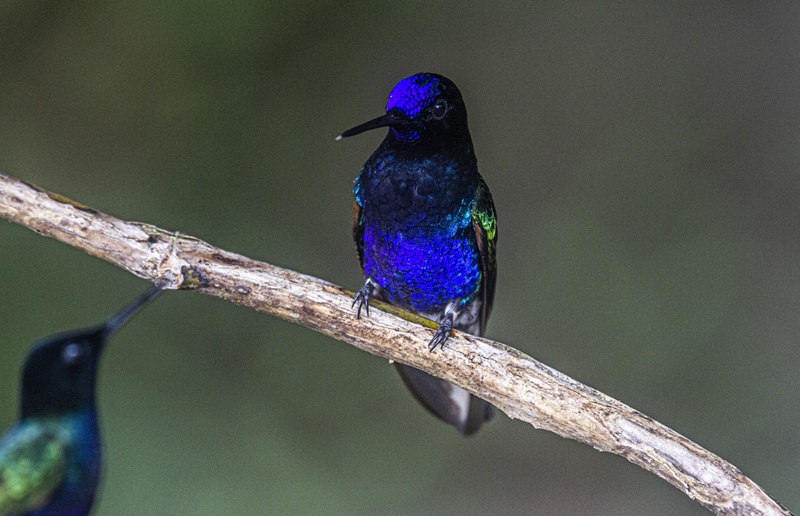
We will visit the area that holds some of the finest Choco endemic cloud forest species. We will visit the fruit feeders where we have excellent chances of seeing the Moss-backed Tanager, Glistening-green, Black-chinned Mountain, Rufous-throated, Lemon-rumped, Flame-faced, Golden-naped, and Golden Tanagers. We might find also Crimson-rumped Toucanet and White-throated Quail-Dove. The hummingbird feeders attract spectacular species such as Velvet-purple Coronet, Violet-tailed Sylph, Brown Inca, Purple-bibbed Whitetip, and Empress Brilliant. Then we will spend birding along the Mashpi Road for mixed-species flocks which often hold rare species such as Indigo Flowerpiercer, Choco Vireo, Pacific Tuftedcheek, and Uniform Treehunter, we might find Black or Rufous-brown Solitaires, Zeledons and Esmeraldas Antbirds, Rose-faced Parrot, Blue-fronted Parrotlet, Grey-and-gold Tanager, Scarlet-browed Tanager, Orange-fronted Barbet, and Barred Puffbird. Then we will back to our place. Night in Sachatamia Lodge.
DAY 8: Long-wattled Umbrellabird / Guango
Early visit a lek for Long-wattled Umbrellabird and some other species along the area. Then we will start our drive to the south of Quito to Guango Lodge at 2,800m (9,200ft). We might find Grey-hooded Bush Tanager, Hooded and Lacrimose Mountain Tanagers, Blue-and-black Tanager, White-banded Tyrannulet, Rufous-breasted Chat-Tyrant, Slaty Brush-finch, Turquoise Jay and Northern Mountain Cacique. At the fast-flowing river, we will try for specialties such as Torrent Duck, White-capped Dipper, and Torrent Tyrannulet. Grey-breasted Mountain-Toucan, Andean Guan, Mountain Avocetbill, Dusky Piha, and Red-hooded Tanager. At the feeders Sword-billed Hummingbird, Collared Inca, Long-tailed Sylph, Tourmaline Sunangel, Chestnut-breasted and Buff-tailed Coronets, Speckled Hummingbird, Tyrian Metaltail, White-bellied Woodstar and Glowing Puffleg. Night in Guango Lodge
DAY 9: Birding to Cabañas San Isidro
Morning watches Insect traps for woodcreepers, warblers, flycatchers, and several species attracting this amazing idea. Watch the hummingbird feeders and explore some of the trails. After lunch, we will go to our next birding spot. Night in San Isidro Lodge
DAY 10: Full day of birding
Cabañas San Isidro is at an elevation of 2,100m (6,800ft). In the morning, we will first target the garden birds that can be easily observed foraging at the garden lights. At night the lights attract insects, and during the morning some species arrive to feed the insects such Inca Jay, Masked Trogon, Subtropical Cacique, Russet-backed Oropendola, Crimson-mantled Woodpecker, Black-billed Peppershrike, Slate-throated and Spectacled Whitestart, Brown-capped Vireo, Russet-crowned Warbler, Black-eared Hemispingus, Mountain Wren, Common Bush Tanager, Pale-edged and Cinnamon Flycatchers, Smoke-colored Pewee, White-tailed Tyrannulet, Montane, and Olive-backed Woodcreeper. The trail system gives us access to the primary forest such as White-bellied Antpitta and Long-tailed Tapaculo. The canopy flocks we can find Marbled-faced and Variegated Bristle Tyrants, Sulphur-bellied Tyrannulet, Barred Becard, Pearled Treerunner, Streaked Tuftedcheek, Blue-winged Mountain, Saffron-crowned, Beryl-spangled, Flame-faced and Blackcapped Tanagers, Chestnut-breasted Chlorophonia, Golden-collared Honeycreeper and Green-and-black Fruiteater, Bicolored Antvireo, and Peruvian Antpitta. The feeders at the lodge attract a good number and diversity of hummingbirds, including the spectacular Long-tailed Sylph, Collared and Bronzy Inca, Fawn-breasted Brilliant, Chestnut-breasted Coronet, Speckled Hummingbird, Green and Sparkling Violetear, Gorgeted Woodstar. After dusk, we will search for nocturnal species, with our main target being the San Isidro “mystery” Owl, a possible split from the Black-banded Owl. Night in San Isidro Lodge
Day 11: Guacamayos to Wild Sumaco
Birding the famous Cordillera de Guacamayos, an outlying ridge of the Andes with extensive forest and numerous rare and local species. The trail along the ridge holds numerous neat birds, some of them seriously rare, and we hope to see at least a few of them. Possibilities include Black-billed Mountain-Toucan, Slate-crowned Antpitta, Dusky Piha, Barred Antthrush, Greater Scythebill, Ocellated Tapaculo, Chestnut-breasted Wren, and White-faced Nunbird, among many other more common species. Later, we start driving to Wild Sumaco, making stops along the Loreto Road to look for Cliff Flycatcher, Blackish, and various hummingbirds at feeders. In late afternoon we will reach the Wild Sumaco reserve located in the beautiful mid-elevation cloudforests at the base of the Sumaco volcano. Night in Wild Sumaco Lodge
Day 12: Wild Sumaco Area
The forest at Wild Sumaco is loaded with east slope foothill specialties not easily seen elsewhere. We will spend much of our time birding the dirt roads and forest trails nearby. The possibilities are Coppery-chested Jacamar, Lined Antshrike, Chestnut-fronted Macaw, Golden-collared Toucanet, Blue-rumped Manakin, Rufous-naped and Olivaceous Greenlets, Spotted and Paradise Tanagers, Yellow-breasted Antwren, Lafresnayes Piculet, Gray-mantled and Coraya Wrens, and Black-billed Treehunter. There is also an antpitta feeder at Wild Sumaco, accessed by about a 20 minute walk down a well-built trail. Plain-backed Antpitta and Ochre-breasted Antpitta are the targets. At night, Band-bellied Owl often sings its haunting song near the lodge and there will also be chances to try for Foothill and Rufescent Screech-Owls. Hummingbird activity is best late in the afternoon. Napo Sabrewing, Brown and Sparkling Violetears, Green Hermit, Ecuadorian Piedtail, Wire-crested Thorntail, Peruvian Racket-tail, Violet-fronted Brilliant, Golden-tailed Sapphire, and Many-spotted Hummingbird.
Day 13: Wild Sumaco to Napo Wildlife Center
Morning birding and then we will start our drive a couple of hours to the steamy town of Coca on the edge of the Napo River. We board a motorized canoe for a two-hour journey; along the way we will see White-winged Swallows flitting over the banks, Yellow-billed Terns plunging into the river, and stately Cocoi Herons. Napo Wildlife Center is a very comfortable and wonderfully remote lodge, only accessible by canoeing another two hours up a magical forest-lined channel that can be pumping with birds. Local guides do the paddling while you sit back and watch White-chinned Jacamars, five species of kingfisher, and even Zigzag Heron if you’re out at dusk in this area, along with many more. On arrival at the lodge, on the shore of a pristine oxbow lake, full of Hoatzins and Black-capped Donacobius.
Days 14: Napo Wildlife Center
We will have a ful day birdingg both hilly terra firme forest and flooded varzea forest. On one day, we will work the terra firme trails searching for Black-necked Red Cotinga, somel species of manakin, Yellow-billed Jacamar, Collared Puffbird, and many species of antbird. If we luck we will find a big army antswarm, where we could find White-plumed and Hairy-crested Antbirds along with Sooty, White-cheeked, Lunulated, and more. We will also spend a morning at the well-known clay lick within Yasuni National Park for Mealy and Yellow-crowned Amazons, Dusky-headed Parakeet, and Blue-headed Parrot. We will do also some birding the flooded forest along the edge of the lake and channel is a great way to spend the afternoons when the trails can be slow. Greater Ani, Azure Gallinule, Lesser Kiskadee, many herons and egrets including the superb Agami Heron, Chestnut-capped Puffbird, Rufous-tailed Flatbill, Casqued Oropendola. Night in Napo Wildlife Center
Day 15: Napo Wildlife Center to Sani Lodge
We will spend the morning on one of Napo Wildlife Center canopy tower, built around a towering kapok tree. From our high perch we can look down on gangs of aracaris, a multitude of oropendolas, flocks of brilliant tanagers, and plenty of other treetop species. Later in the morning, we will transfer to Sani Lodge, which is located on a long oxbow lake a bit north of the Napo River. For our first afternoon, we may target the rare Cocha Antshrike. Night in Sani Lodge
Days 16: Sani Lodge
We will spend time on forest trails looking for species such as Wire-tailed Manakin and Golden-headed Manakins, Chestnut-crowned Gnateater, and Striated Antthrush, White-lored Antpittawhich are harder (or not present) The canopy tower is great for birding and we plan to spend most of a morning there. The wide metal stairway makes access much easier than most towers, and the platform is spacious. Harpy Eagles are seen from the tower with some regularity along with other raptors such as Slate-colored Hawk, Gray-headed Kite, and Double-toothed Kite. Other species that are often seen include Many-banded Aracari, Gilded Barbet, Great Jacamar, Paradise and Opal-crowned Tanagers, Yellow-billed and White-fronted Nunbirds, White-throated and Channel-billed Toucans, Plum-throated Cotinga, along with numerous trogons, woodcreepers, and flycatchers. It is also a good place to see several species of monkeys including Red Howler and White-fronted Spider Monkey. Near the tower is the blind where Wire-tailed Manakin can usually be seen easily, and the trail to the tower can have skulking species such as antpittas and antbirds. The lake and forested channels at the lodge are great places to do some relaxing birding from canoes in the afternoon for Black-capped Donacobius, White-winged Swallow, Rufescent Tiger-Heron, Capped Heron, Pale-vented Pigeon, Lesser Kiskadee, and Greater Ani are some of the more conspicuous birds around the lake. The channel is like a tunnel through the towering forest, and is better for shy kingfishers including American Pygmy and Green-and-rufous, as well as Agami Heron, the rare Cocha Antshrike, Orange-crested Manakin, White-chinned Jacamar. We will also spend some time on one of the river islands in the Napo, where a number of species are restricted, such as Castlenaus Antshrike, Oriole Blackbird, Black-and-white Antbird, Parkers Spinetail, and Lesser Wagtail-Tyrant. Sani Lodge
Day 17: Sani Lodge to Quito
There may be some time for some early morning birding before travelling by motorized canoe back to Coca. We then take a short flight over the snow-capped volcanoes of the Andes that often allows spectacular views of snow-capped volcanos. Night in Quito
DAY 18: Morning birding - Flight Home
On our last morning, we will ascend the Andes to an elevation of approximately 4,000 m (13,000 ft) to get to the Antisana Reserve. Visiting the tundra-like Paramo habitat surrounding the astonishing snow-capped Antisana Volcano where we will find the enigmatic Andean Condor and near-endemic Carunculated Caracara, Black-chested Buzzard-Eagle, endemic Ecuadorian Hillstar, both Stout-billed and Chestnut-winged Cinclodes, Many-striped Canastero, Plumbeous Sierra Finch, Variable Hawk, Black-winged Ground-Dove, Andean Gull, Andean Lapwing, Black-billed Shrike-Tyrant, Paramo Ground Tyrant, Paramo Pipit, and the rare Andean Ibis. At La Mica, a beautiful lake at the base of the Antisana Volcano, we will scan for Andean Teal, Andean Duck, Yellow-billed Pintail, Andean Coot, Silvery Grebe and we will have chances for Aplomado Falcon and Cinereous Harrier, Shining Sunbeam and Black-tailed Trainbearer, and Giant Hummingbird. The reserve also gives us good chances for Andean Fox and White-tailed Deer. Then we will move to Papallacta for birding the treeline scrub and paramo on the western slope of the eastern Andes where we can find Paramo Tapaculo, Rainbow-bearded Thornbill, Blue-mantled Thornbill, Andean Tit-Spinetail, and Tawny Antpitta. Weather permitting, we will drive up to the antennas to look for the highly sought-after Rufous-bellied Seedsnipe, Giant Conebill in Polylepis forest, and the rare Red-rumped Bush Tyrant. At Papallacta Lake, we will scan for ducks and waterbirds and the habitat surrounding the lake is good for mixed-species flocks which often include White-throated Tyrannulet, Spectacled Whitestart, Cinereous, and Blue-backed Conebills, Black-backed Bush Tanager, Buff-breasted and Scarlet-bellied Mountain Tanagers, Golden-crowned Tanager, Pale-naped Brush-finch, Agile Tit-Tyrant with good luck Masked and Black-chested Mountain Tanagers, Viridian Metaltail and Great Sapphirewing. The enigmatic Spectacled Bear has been seen in the area. Then we will start our drive to Quito International Airport for our flight Home.